
Institutions with trade-literature holdings
Several libraries collect trade catalogues deliberately. Check each one's online catalogue and finding aids before visiting; most require an appointment.
- Smithsonian Libraries and Archives — the Trade Literature Collection, associated with the National Museum of American History, Washington, D.C.
- Hagley Museum and Library — Wilmington, Delaware; strong in American business and industry.
- Winterthur Library — Delaware; decorative arts, furnishings and design trade catalogues.
- Library of Congress — Washington, D.C.; broad holdings across divisions.
- Baker Library, Harvard Business School — business history and company records.
- Museum of English Rural Life — Reading, UK; agricultural machinery and implement catalogues.
- National Art Library, Victoria and Albert Museum — London; design and trade publications.

Digitised runs and research method
Much is already online. The Internet Archive hosts scanned catalogues contributed by libraries and individuals; institutional digital collections add more each year. Treat a scan as a copy of one specific exemplar — note whose copy it is.
- Define the question. A price in a given year? A product's first appearance? A firm's address history?
- Find the run. Search library catalogues under the firm's name and the heading "Catalogs, Commercial".
- Compare editions. Changes between seasons are often the evidence.
- Record the exemplar. Holding institution, call number or URL, date consulted.
- Cite precisely. Issuer, Title, edition, place, date, page; then the holding.
Our own entries follow the same format, so a citation here can be traced back to a numbered record.
Societies, dealers and value
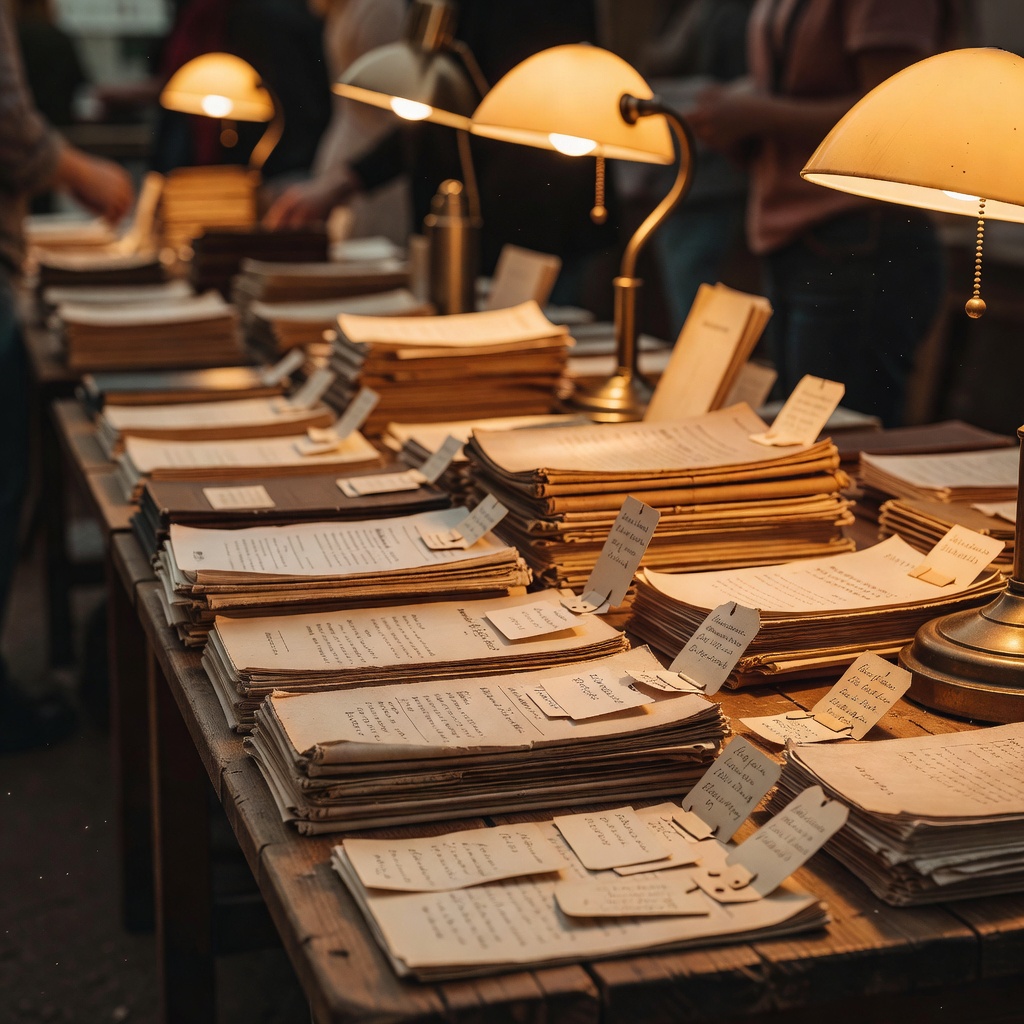
The Ephemera Society in the United Kingdom, founded in 1975, and the Ephemera Society of America both connect collectors, publish research and point to fairs where catalogues change hands. Dealers who specialise in trade literature are often the best informal reference for scarcity.
Value is a product of four factors, in roughly this order:
- Subject — architecture, automobiles, toys, firearms and early technology attract wider markets.
- Rarity — early, regional or short-lived issues survive in small numbers.
- Completeness — order forms, inserts and covers intact.
- Condition — brittleness and missing pages cut value sharply.
Common late-twentieth-century issues are rarely valuable in money terms. Their research value can still be high. Catalogpitallynestl does not appraise items.
Figures on record
Continue the catalogue
 01
 02
 03