Why catalogues decay
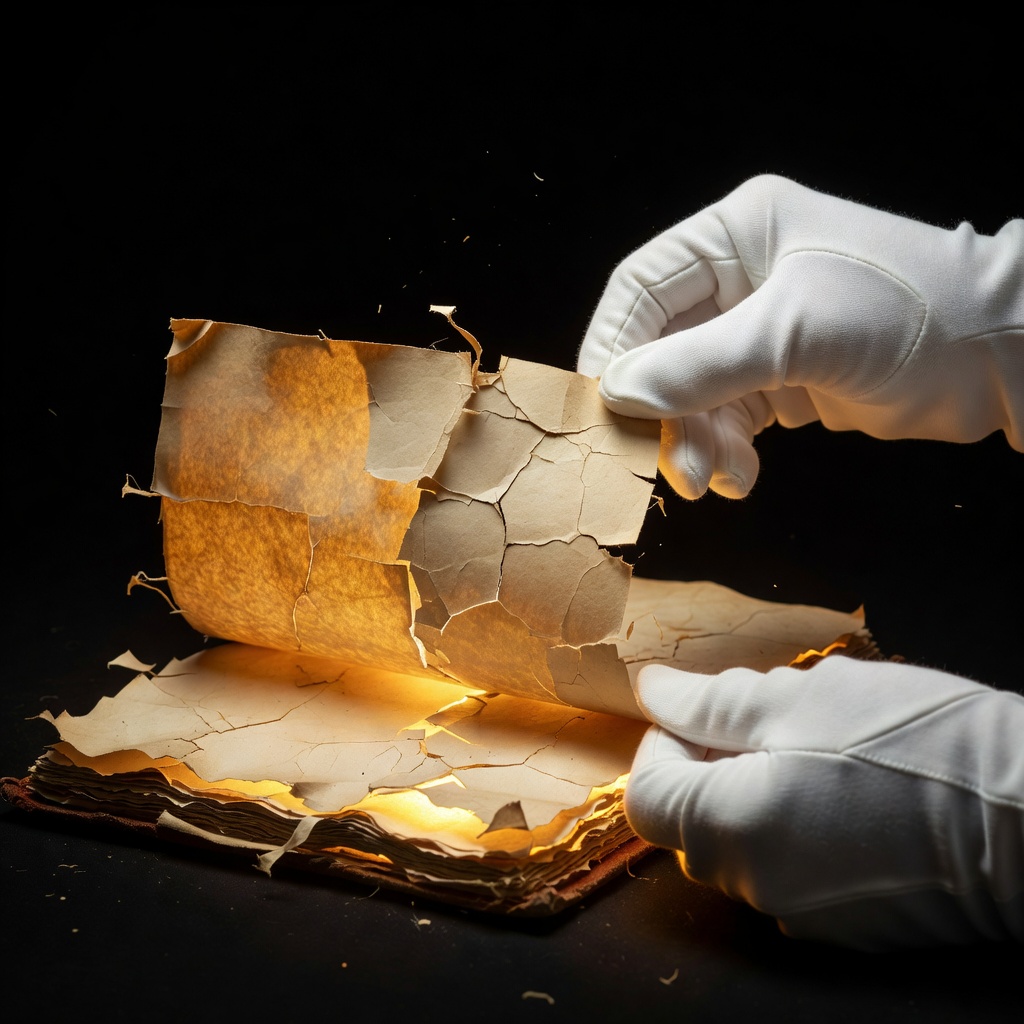
Large mail-order books were printed on groundwood paper: cheap, bulky and full of lignin. Lignin and residual acids break down cellulose over time, so the paper yellows, then browns, then cracks when folded. Glossy colour sections behave differently — coated stock can block together if it gets damp, and the coating can flake.
The binding adds its own risks. Wire staples rust and stain the centre fold. Hot-melt adhesives in perfect-bound issues dry out and release pages. Previous owners add tape, rubber bands, pressed flowers and pencilled sums. Each of these is a record of use, and each is a slow hazard.
Acidity cannot be reversed by storage. It can only be slowed. Deacidification is a conservator's job, not a kitchen-table one.

Environment and enclosures
Stability matters more than any single number. Aim for a cool room with steady relative humidity, broadly in the 30–50% band commonly recommended for paper, and avoid swings. Above roughly 65% relative humidity, mould becomes a real risk. Lofts, cellars and outside walls are the usual culprits. ISO 11799 sets out storage requirements for archive and library materials if you want the formal version.
- Store flat, in boxes sized to the item, never packed so tight that spines distort.
- Use acid-free, lignin-free folders and boxes; paper meeting ISO 9706 is described as permanent.
- For sleeves, choose uncoated polyester (PET). Avoid PVC, which off-gasses.
- Prefer enclosures that have passed the Photographic Activity Test (ISO 18916) — a useful marker of safe material even for paper.
- Keep out of daylight. Light fades colour printing and accelerates yellowing.
Handling and digitisation
Clean, dry hands are generally preferred over cotton gloves for paper, because gloves reduce grip and make tearing more likely. Support the item fully; turn pages from the outer corner; never open a brittle catalogue flat. Remove rubber bands and paper clips. Leave old tape for a conservator unless it is already detaching.
Digitise once, well, to reduce future handling. For reference work, many institutions follow the FADGI guidelines (Federal Agencies Digital Guidelines Initiative). A practical baseline for a private collection: around 400 ppi, an uncompressed TIFF master, a colour target in the first frame, and a JPEG copy for everyday use. Name the files with the item number from Entry 02.
Insurance and loss: keep the digital record and the written description in a second location.
Figures on record
Continue the catalogue
 01
 02
 04